Thirst/Trap
2020 · Photographs, two-channel video, Google Earth archive
Solo exhibition, Denny Dimin Gallery, New York, June 18 – August 21, 2020
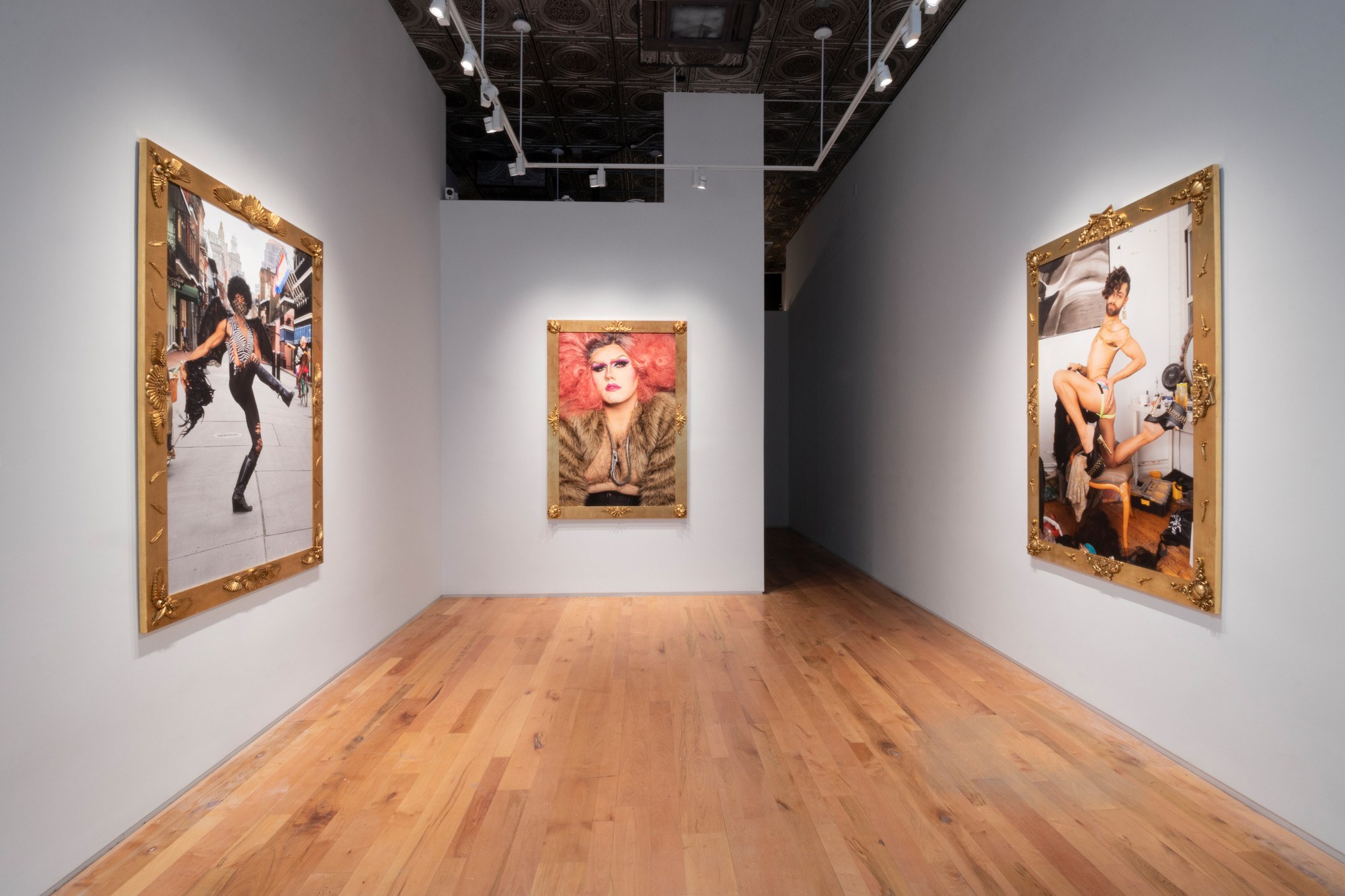
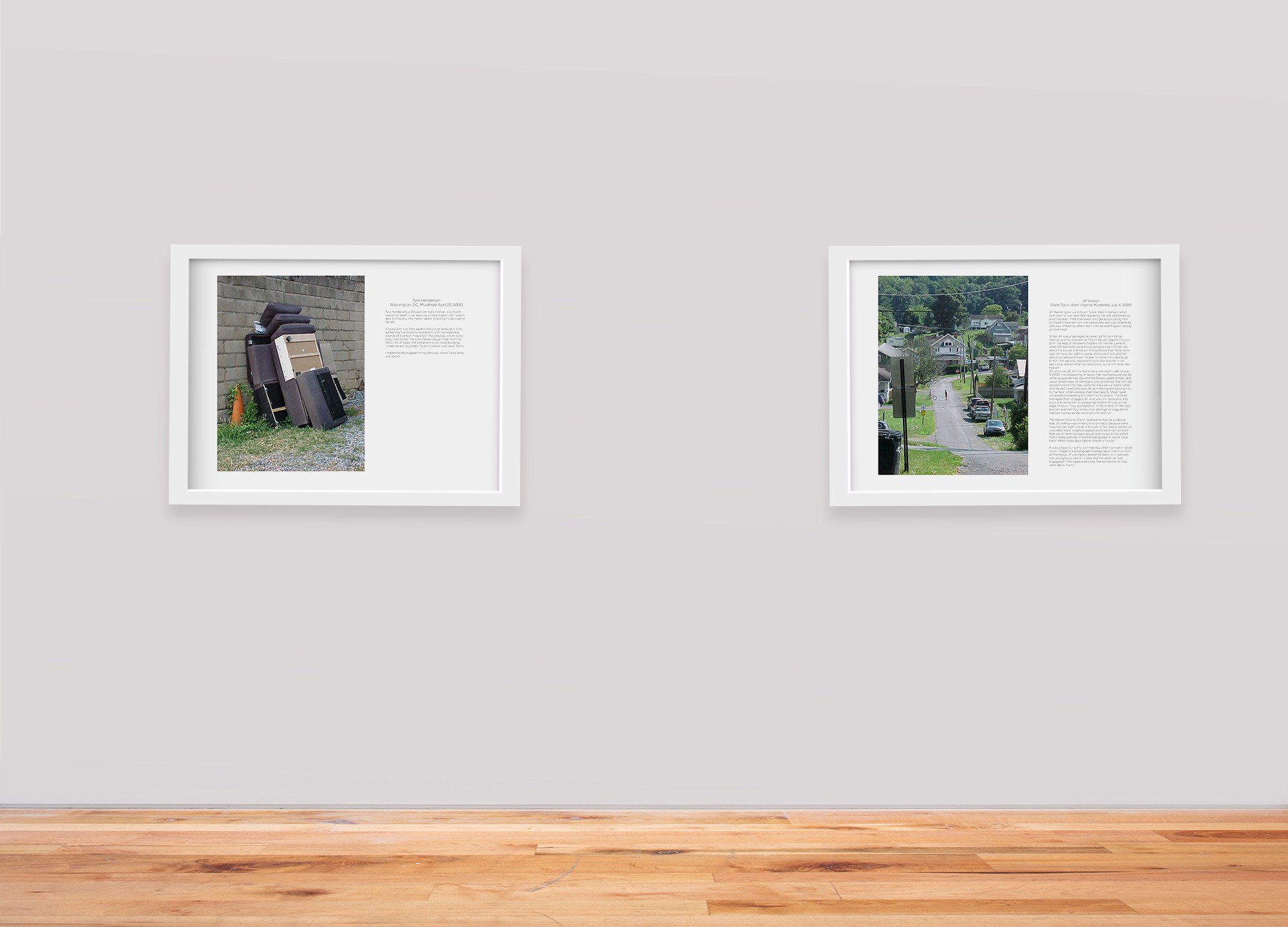
I made Best Lives and Insufficient Memory at the same time, and this show put them in the same building on purpose. Two rooms, twenty years apart.
I was twenty in 1999. That was the year Matthew Shepard was murdered, the year Congress began arguing about whether queer people counted as a protected class, and the year the first successful consumer digital camera came to market. Those three things happened at once. Twenty years later I was photographing queer people who had built whole selves out of the cameras in their pockets, and also driving to the places where queer people were killed while that argument dragged on.
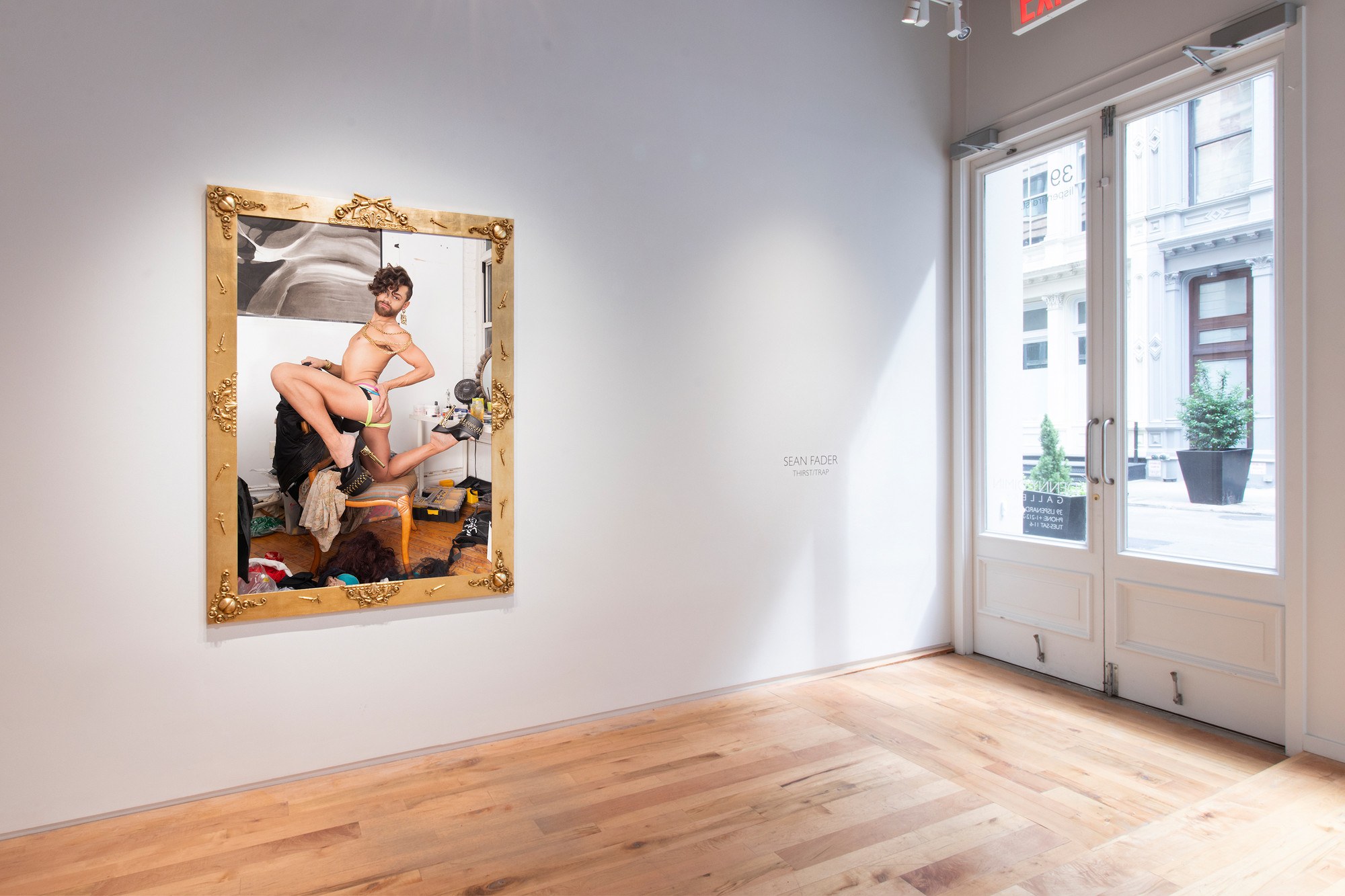
The front room was celebration: large gilded portraits of people living exactly as they wanted to be seen, made from images they had already chosen and posted themselves. The back room was the cost: unmarked sites, photographed on a camera from 1999 that could barely hold a picture. One room is what visibility looks like when it works. The other is what happens when nobody is looking.
See Best Lives and Insufficient Memory.
Selected press
- Sean Fader Explores a New Queer Narrative With ‘Thirst/Trap’ · PDFWWD (Women’s Wear Daily)
- Viewfinder: Sean Fader and queer visibility in the age of the digital photographDavid Getsy, exhibition catalogue essay
- The Digital Limits of Queer Trauma and CelebrationHumble Arts Foundation
- Sean Fader’s practice celebrates and interrogates digital technologyBritish Journal of Photography